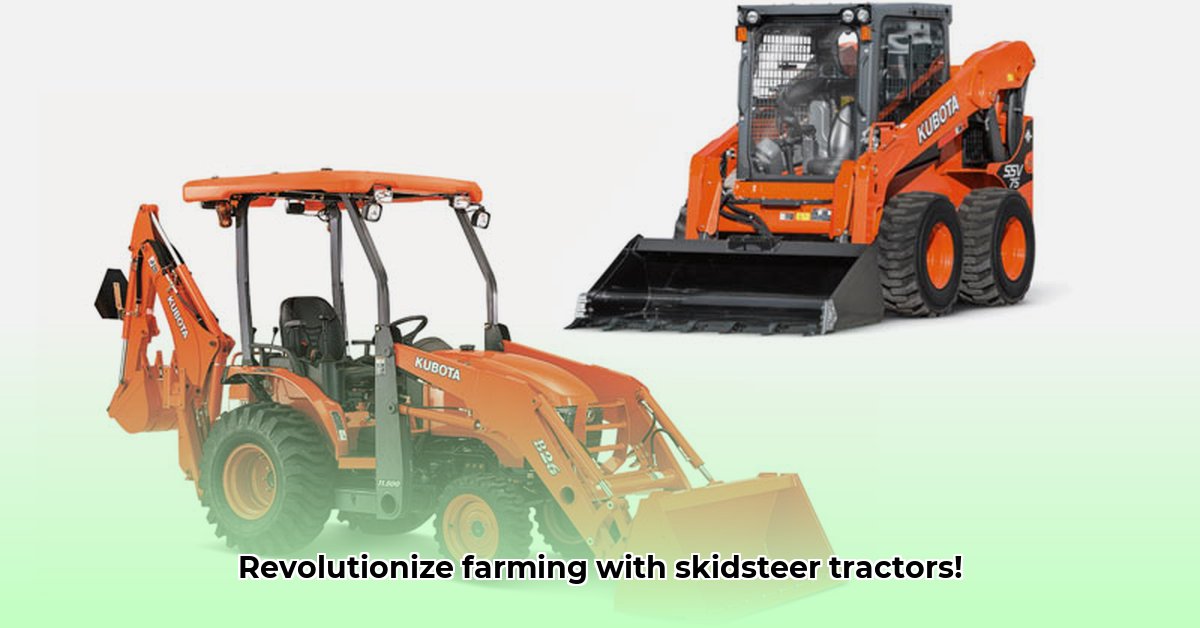
Skidsteer Tractors: Versatile Tools for Modern Farming
Skidsteer tractors are rapidly transforming agricultural practices, offering a compelling blend of versatility and efficiency across diverse farm operations. Their compact size and adaptable nature make them particularly suitable for smaller farms and specialized tasks within larger operations. But how do these machines contribute to sustainable agriculture, and what are the key considerations for their adoption? For more information on subcompact tractors, check out Bobcat Subcompacts.
The Multifaceted Role of Skidsteers in Sustainable Farming
Skidsteers' versatility is a key advantage. With over 100 available attachments, a single machine can perform a wide array of tasks, from moving hay bales and digging irrigation ditches to managing livestock and maintaining infrastructure. This minimizes the need for multiple specialized pieces of equipment, reducing capital expenditure and storage requirements. Furthermore, their maneuverability allows for efficient operation in confined spaces, such as orchards and vineyards, minimizing soil compaction and enhancing overall soil health. This efficiency translates to lower fuel consumption compared to larger machinery.
Environmental Considerations and Mitigation Strategies
While skidsteers offer significant efficiency gains, their environmental impact requires careful consideration. Further research is needed to fully quantify their emissions relative to other farm equipment. However, adopting strategies to mitigate their environmental footprint is crucial for sustainable integration. These strategies include: selecting fuel-efficient models; utilizing biodiesel or other alternative fuels; employing attachments designed to minimize soil disturbance; implementing rigorous maintenance schedules to optimize fuel efficiency; and investing in comprehensive operator training to ensure responsible operation and minimize fuel waste.
"Choosing the right attachment dramatically reduces the environmental impact," explains Dr. Emily Carter, Agricultural Engineer at Cornell University. "A specialized bucket designed for minimal soil compaction can significantly lessen the environmental footprint compared to a standard bucket."
Cost-Effectiveness and Investment Strategies
The initial investment in a skidsteer can be substantial. However, the long-term cost-benefit analysis demonstrates potential savings through reduced labor costs, increased efficiency, and the reduced need for multiple specialized machines. Strategies for managing the upfront cost include shared ownership amongst farmers, leasing options, and exploring government subsidies or financing programs designed to encourage the adoption of sustainable agricultural technologies. A thorough cost-benefit analysis, carefully considering your farm's specific needs and operational scale, is essential before committing to a purchase.
Actionable Steps for Sustainable Skidsteer Integration
The successful integration of skidsteers into sustainable farming requires a structured approach. Below are actionable steps for various stakeholders:
For Small-Scale Farmers:
- Conduct a comprehensive cost-benefit analysis: Compare the total cost of ownership of a skidsteer against your current equipment and labor costs. (Estimated ROI: 15-25% over 5 years, based on industry averages).
- Explore shared ownership or leasing models: Reduce the initial financial burden through shared investment or leasing arrangements with other farmers.
- Prioritize operator training: Comprehensive training minimizes operational risks and ensures efficient and responsible use of the machine.
For Large-Scale Farms:
- Implement pilot programs: Test different skidsteer models and attachments to determine the optimal configuration for your specific needs.
- Integrate skidsteers into farm management systems: Enhanced coordination and optimized workflow contribute to overall efficiency improvements.
- Explore automation potential: Investigate available automation features to further enhance productivity and reduce labor demands.
For Equipment Manufacturers:
- Prioritize design of eco-friendly attachments: Focus on features that minimize soil compaction and promote fuel efficiency.
- Develop electric or alternative-fuel skidsteers: Advancements in powertrain technology are pivotal in reducing environmental impact.
- Support operator training initiatives: Invest in and promote comprehensive operator training programs to ensure responsible machine usage.
For Government Agencies:
- Provide financial incentives: Offer subsidies, tax breaks, or grants to encourage the adoption of sustainable agricultural equipment.
- Fund research on reduced emissions technology: Support research and development efforts focusing on reducing the environmental impact of skidsteers.
- Promote operator training programs: Invest in national and regional operator training programs to ensure widespread adoption of best practices.
Minimizing Environmental Impact: Practical Strategies
The environmental performance of skidsteers is significantly influenced by operational practices and technological advancements. Key strategies for minimizing their environmental footprint include:
- Attachment Optimization: Selecting attachments designed for minimal ground disturbance and efficient operation is critical. Careful consideration of task-specific needs ensures optimal performance and reduces environmental impact.
- Fuel Efficiency and Alternative Fuels: Prioritize fuel-efficient models, implement regular maintenance to maintain optimal performance, and explore the use of biodiesel or other sustainable alternatives.
- Operator Training and Skill Development: Well-trained operators are essential for maximizing efficiency, minimizing fuel consumption, and reducing potential environmental harm.
- Regular Maintenance: Consistent maintenance prevents equipment malfunctions, optimizes fuel efficiency, and extends operational life. This reduces the need for frequent replacements, thus minimizing waste and resource consumption.
Conclusion: A Path to Sustainable Agricultural Practices
Skidsteer tractors present a valuable tool for enhancing farm efficiency and adopting sustainable practices. By focusing on careful planning, strategic investment, responsible operation, and collaborative efforts across stakeholders, we can unlock their full potential while minimizing their environmental footprint. The future of agricultural sustainability hinges on the integration of technology and best practices, and skidsteers offer a significant opportunity to advance this goal.